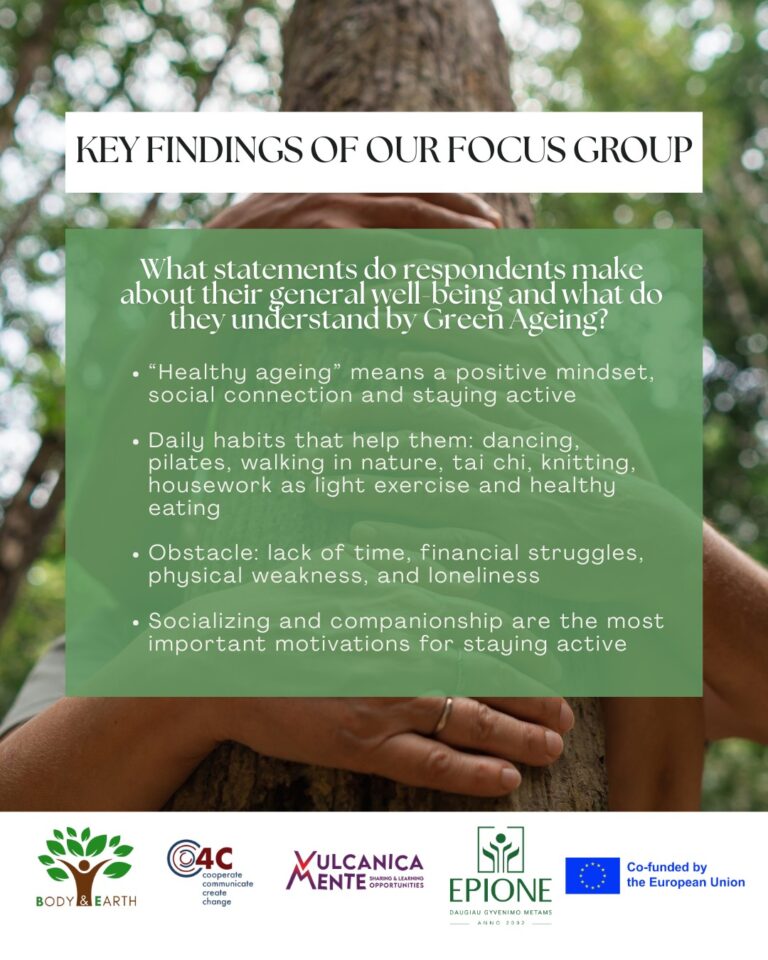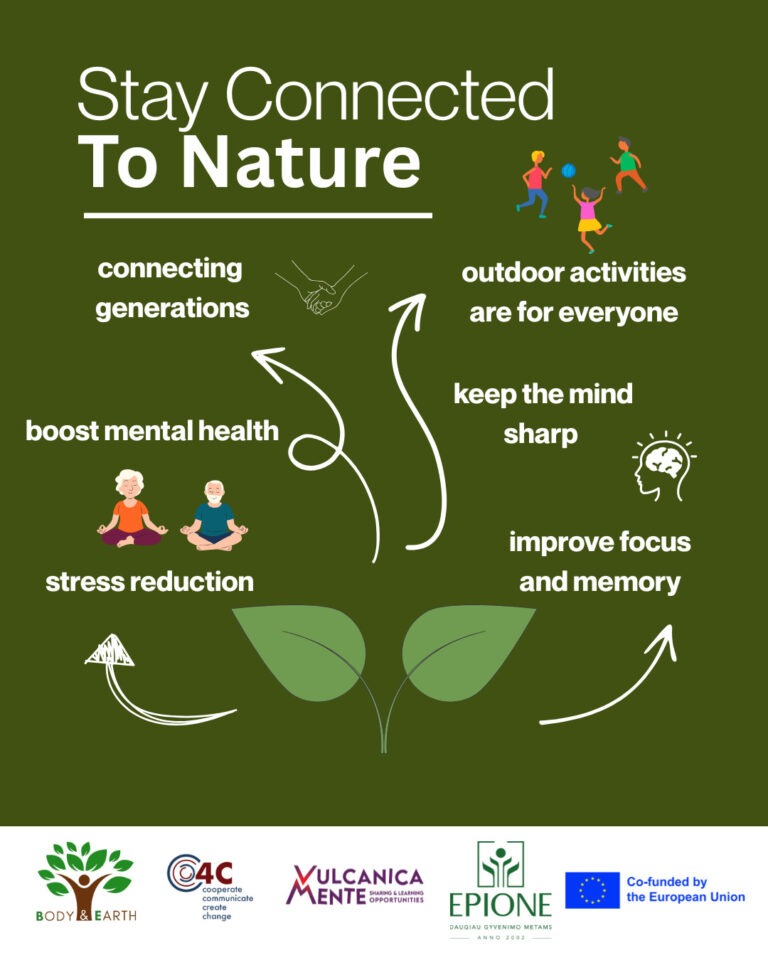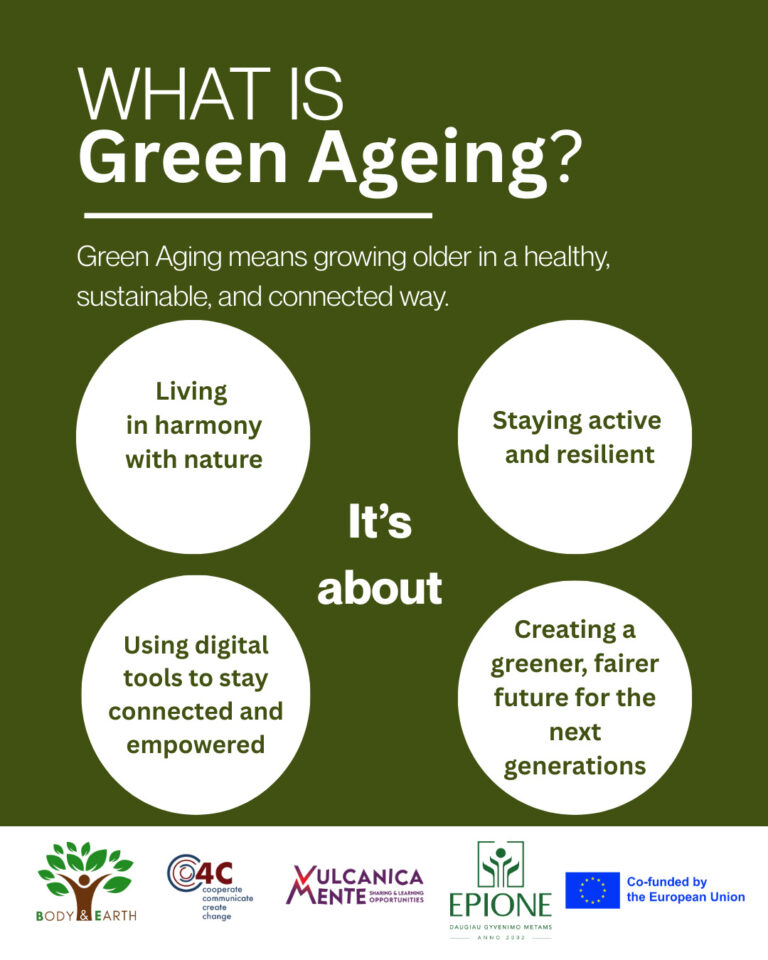


Climate action is usually pictured in big terms: protests, policy targets. Ask older adults in Italy, Lithuania, and Greece how they actually relate to the environment, though, and a quieter picture turns up. Across BEEPGA’s focus groups, participants talked about environmental responsibility mostly through everyday acts of care for their homes and the spaces around them. Not protest banners. Not policy debates. The BEEPGA Guidebook calls this environmental stewardship, something older adults are already practising rather than waiting to be taught.
What stewardship looks like
The examples participants gave are everyday ones: a small garden or balcony, less household waste, looking after shared spaces, paying attention to everyday consumption. In the questionnaires, a majority of respondents across the partner countries said they already recycle, reduce waste, walk more, or tend gardens and local outdoor spaces, and time outdoors, in particular, came up again and again. Asked whether outdoor activity supported their well-being, 90% of Lithuanian respondents said yes, 88.2% in Greece, 86.3% in Italy. Three numbers within four points of each other, across three different countries. The specific forms of care differ with local living conditions. What’s shared, underneath that, is simpler: people feel responsible for these spaces, and they feel like the places are theirs.
Why it matters to the people doing it
For older participants, caring for their surroundings does more than help the environment. Both the questionnaires and the focus groups tied it closely to feelings of purpose, autonomy, and dignity. That tracks with a wider body of research: older adults make an active contribution to climate adaptation and community resilience.
The strongest motivation participants described was concern for future generations. They talked about the quality of life their children and grandchildren will inherit. Worries about heat. About whether the parks and green spaces they know will still be there. In several focus groups, this came up as one of the main emotional reasons for adopting more sustainable habits and paying closer attention to environmental change.
Doing what they realistically can
The research also revealed a clear limit. Participants pushed back on messages that frame climate action as a personal moral burden. Many said they’re already doing what they realistically can, given their health and their finances.
What this means for adult educators
For anyone teaching or supporting older adults, the Guidebook points to three practical takeaways:
- Build on existing habits and values. Start from the sustainable practices participants already have. For most people, this work started years ago, quietly, long before anyone called it sustainability.
- Avoid moralising or idealised narratives. Messages that assign blame or set unrealistic standards undercut the engagement they’re meant to build.
- Frame sustainability as care and shared responsibility. Care for a home, a garden, or a neighbourhood is language older adults already use, and it’s a stronger starting point than abstract climate targets.
What the Guidebook argues, in the end, is small but specific: the work adult educators are looking for is often already happening, in a balcony garden or a walk around the block, and the job is mostly to notice it and build from there. The full findings are in the BEEPGA Guidebook, on the Outputs page of this site.
The project Body & Earth is Co-funded by EU.