

“Ecosomatic” is a compound of two ideas: soma, the lived, felt body (as distinct from the body treated as a purely biological object), and ecology, the relationship between living beings and their environment. BEEPGA uses the term to describe an approach where bodily perception and ecological awareness aren’t treated as two separate topics, but as one integrated way of experiencing and responding to the world.
This isn’t a new idea on its own. Body-based and nature-based approaches to wellbeing have a long history in both therapeutic and educational settings. What’s distinctive about BEEPGA’s approach is applying that lens specifically to green ageing: using ecosomatic awareness as a bridge between two things older adults are already living through, bodily change and environmental change, instead of treating them as unrelated challenges.
Where the idea comes from
The concept draws on environmental philosophy. BEEPGA’s research cites David Abram’s 1996 work in particular, which argues that the body is never really separate from its surroundings. It’s continuously shaped by environmental conditions: air quality, temperature, light, sound, and access to natural spaces all register in the body, whether or not we consciously notice them. For older adults specifically, BEEPGA’s research treats this as a practical starting point, not an abstract philosophical claim: ageing changes how the body registers these conditions, so environmental awareness and body awareness genuinely can’t be separated in later life the way they might be for a younger, more physically resilient person.
What participants told us
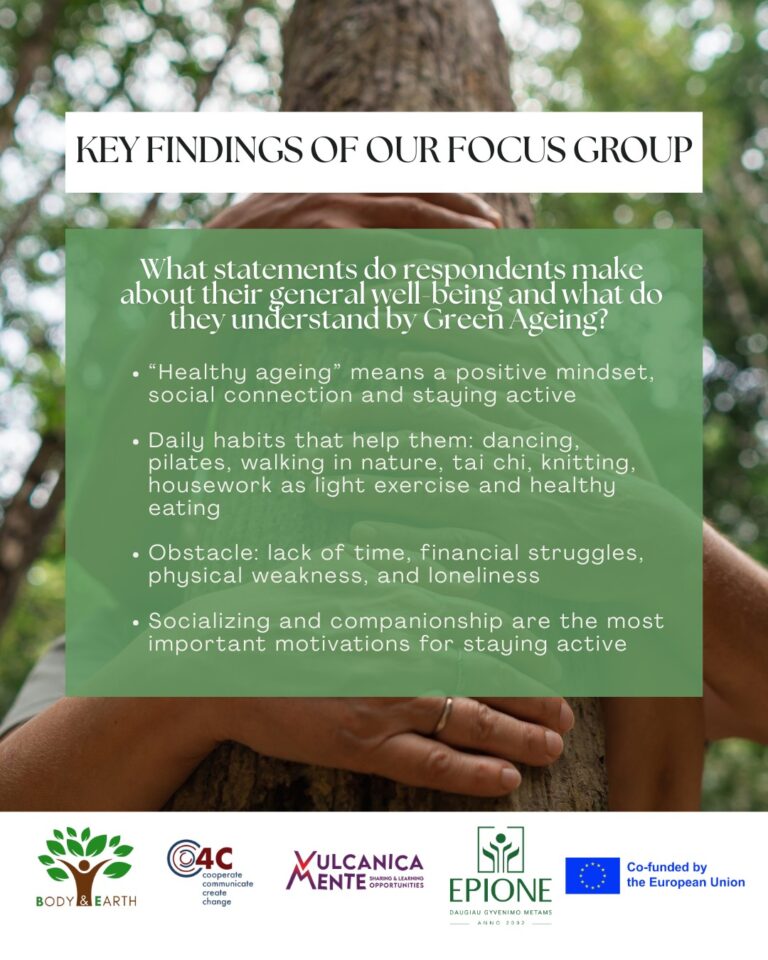
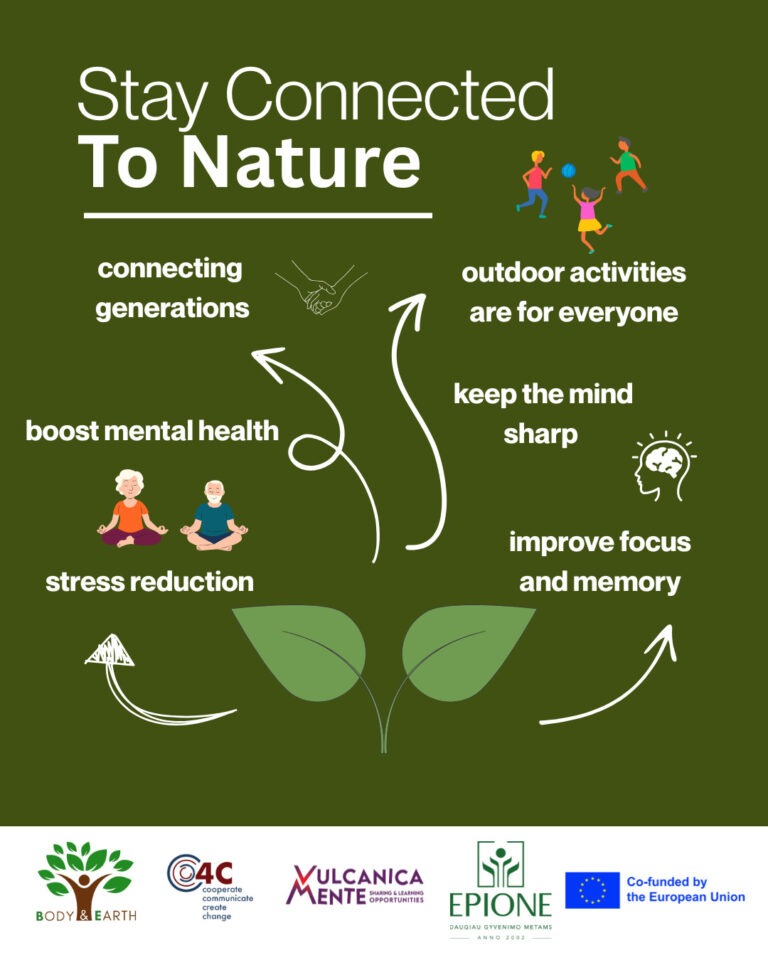
BEEPGA’s focus groups in Italy, Lithuania, and Greece found this idea showing up again and again in how participants already talked about ageing and environmental change, well before the project introduced the term “ecosomatic” to them. Across all three countries, people described “listening to the body,” “feeling changes in the air,” and “adjusting activities according to the weather.” The project calls this embodied environmental literacy: a form of understanding built through lived experience, not formal instruction. It’s knowledge that already exists in these communities. BEEPGA’s role is to recognise and build on it, not replace it.
Four ways ecosomatic awareness shows up
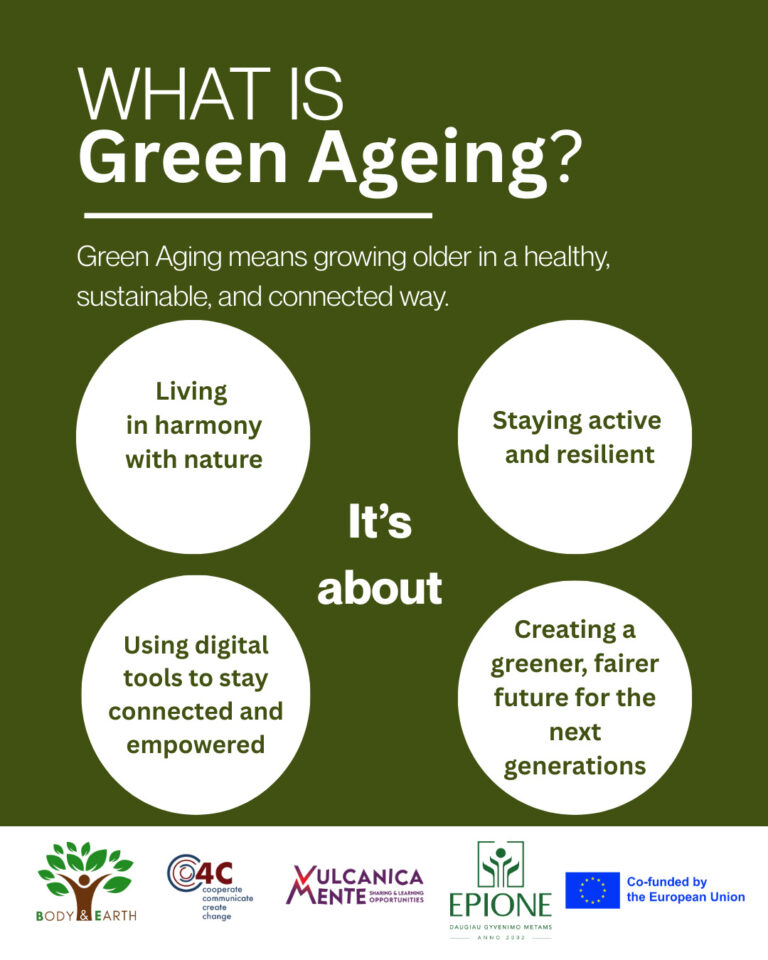
Drawing on this research, BEEPGA describes ecosomatic awareness in older adults as the capacity to do four connected things. The first is perceiving bodily sensations in relation to environmental conditions, noticing how the body responds to heat, cold, or air quality instead of overriding it. The second is recognising that time in nature supports physical and emotional regulation, not just filling spare hours. Third is adapting movement, rest, and daily routines as the environment changes. And fourth is building a more care-oriented relationship with the natural environment: something to actively tend, not a passive backdrop to daily life.
From research to practice
This framework isn’t staying on paper. It was the organising idea behind BEEPGA’s international training in Lecce, where participants spent a week practising ecosomatic awareness directly, moving between coastal, forest, and garden settings. It’s also shaping the Ecosomatic Cards the project is developing: a set of activity cards designed to support reflection, movement, sensory awareness, and group learning, built specifically so adult educators and social workers can bring this way of working into their own communities once BEEPGA’s formal activities conclude.
The project Body & Earth is Co-funded by EU.