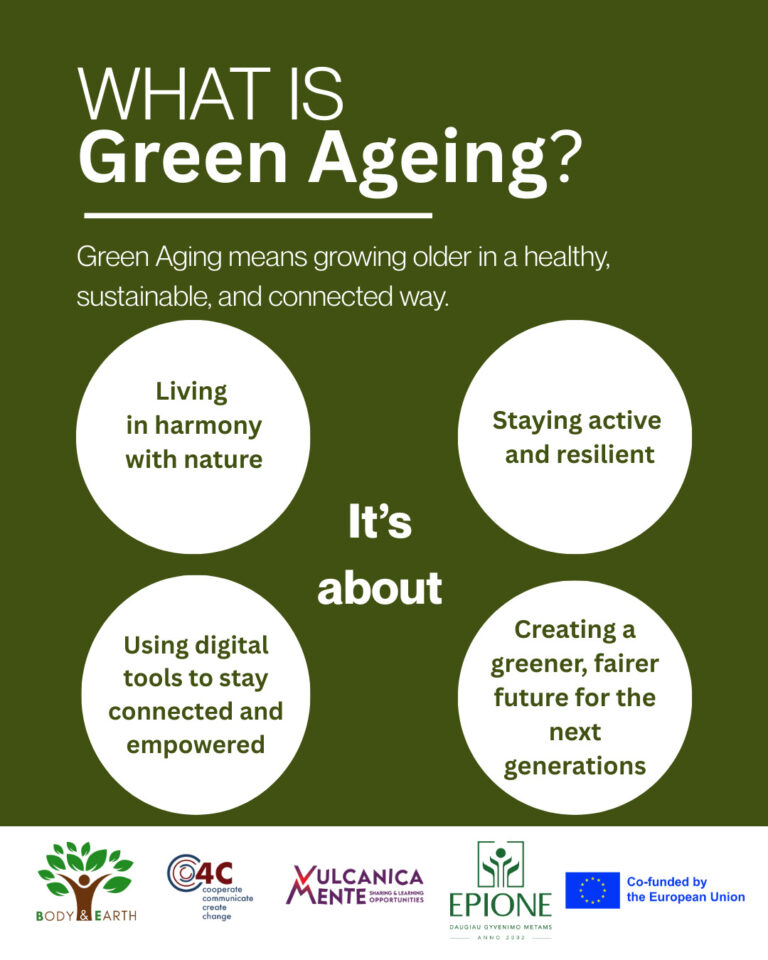

“Green ageing” shows up often in EU policy language, usually defined in fairly abstract terms: sustainability, wellbeing, environmental awareness. BEEPGA’s research takes a different starting point. Rather than defining the concept first and asking people to adopt it, the project asked older adults and adult educators in Italy, Lithuania, and Greece what green ageing already means to them, in their own words and daily lives.
Listening to what people actually say
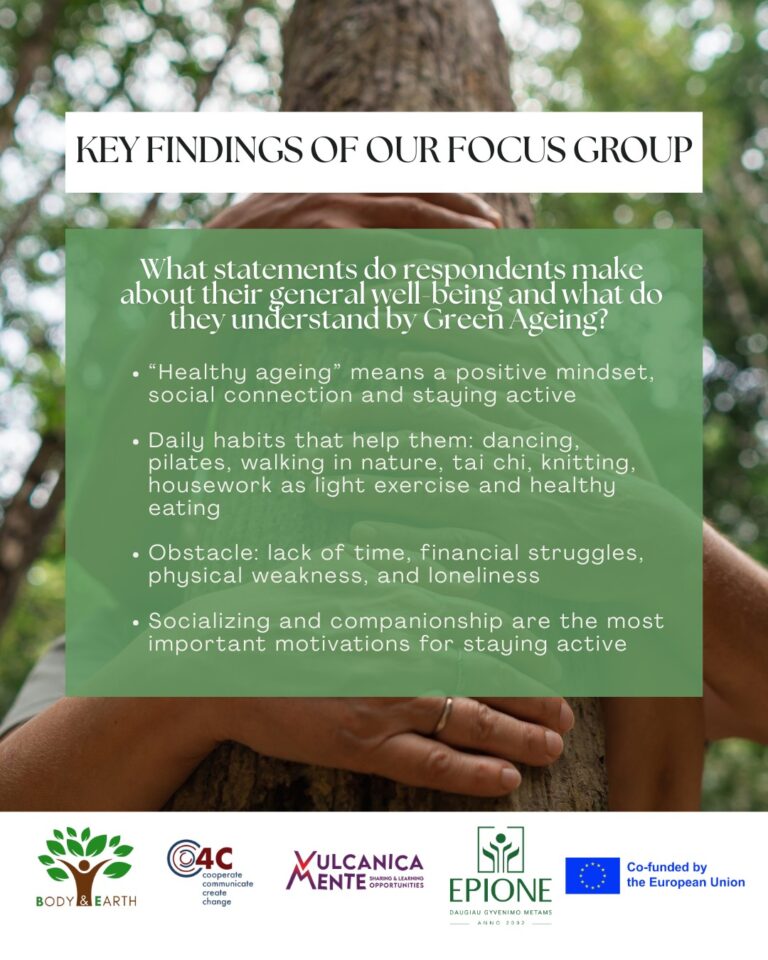
The project’s findings come from focus group interviews and online questionnaires run across all three partner countries. What they show is that awareness of green ageing is real, but “unevenly articulated.” Many respondents demonstrated a strong intuitive understanding of the relationship between ageing well and living sustainably, even when they had never used the term “green ageing” to describe it themselves. That gap, between lived understanding and formal vocabulary, is part of what BEEPGA’s Guidebook and Training Guide are designed to close.
How people describe green ageing
Asked directly what green ageing means to them, respondents across the three countries converged on three main ideas, though with some variation by country. Maintaining a healthy lifestyle was the most consistent association: named by 74.5% of respondents in Italy, 72% in Lithuania, and 68.6% in Greece. Remaining independent and self-sufficient came through even more strongly in Lithuania, at 84%, compared with 60.8% in Italy and 56.9% in Greece. And healthy eating, the use of natural products, and waste reduction was named by 62.7% in Italy, 54% in Lithuania, and 47.1% in Greece. The consistency across countries, even as the exact weighting shifts, is part of what points to green ageing being a genuinely shared concern across BEEPGA’s partner regions, not a concept that only resonates in one cultural context.
When the climate changes, daily life changes too
BEEPGA’s research also looked at how environmental change is already reshaping older adults’ daily routines and mobility. Extreme temperatures and increasingly unpredictable seasons directly affect decisions about leaving the house, walking, or taking part in outdoor activities, and with them, autonomy and daily structure. The specific challenges differ by region, from prolonged heatwaves in some areas to growing seasonal unpredictability in others, but participants across all three countries described a similar pattern: continuously having to adapt daily habits in response to a changing environment. In the project’s questionnaires, more than half of participants reported limiting outdoor activities during periods of extreme heat or cold. Those limits were tied to more fatigue and pain, lower motivation, and often frustration.
Green ageing and digital life
BEEPGA’s research treats digital literacy as part of green ageing, not a separate issue. Understanding how to maintain a healthy, green lifestyle while growing older increasingly means being able to navigate digital tools and platforms. But older adults face real barriers here: apprehension about complex platforms, privacy concerns about personal data, and health-related factors that affect confidence with technology. The project’s own survey data reflects this: digital confidence varies widely among adults aged 55 and older.
What BEEPGA’s research found, though, is that support works best when it goes beyond technical skills alone. The most effective approach combines adult educators, social workers, and peer mentors, and focuses as much on comfort and motivation as on competence. The sustainable digital practices participants described were about using screen time well, not maximising it: limiting overall use, choosing tools purposefully, pairing online engagement with offline social contact, and going online specifically to reach reliable information about health and the environment.
That’s the fuller picture behind “green ageing” as BEEPGA defines it: a set of intuitive, lived practices spanning physical health, independence, environmental adaptation, and digital confidence, shaped by how climate change and digital transformation are already showing up in older adults’ everyday lives. The companion piece, “What Are Ecosomatic Practices?”, covers the bodily side of the same picture.
The project Body & Earth is Co-funded by EU.